
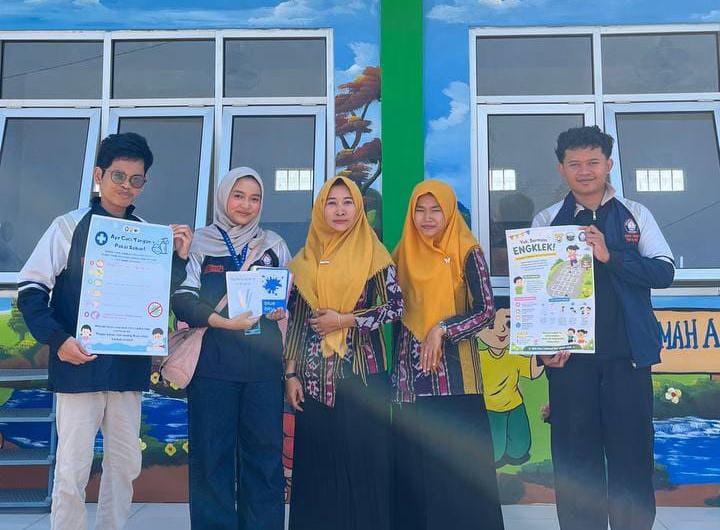
As part of the KKN Team II of Universitas Diponegoro for the 2025/2026 period, Zalfa Zahiyah Rasyanda, student from the English Literature Study Program carried out the work program “Play, Move, Speak: Learning Colors in English in a Fun Way.” This activity involved kindergarten students of TK Fajar Harapan in Lebosari Village. This program was designed to build children’s excitement about English from an early age by presenting learning that is fun, active, and free from pressure, so that children come to see English as something exciting to learn. This activity also aligns with the theme of Sustainable Development Goal (SDG) 4, Quality Education, by supporting inclusive and quality education from an early age.
This activity was carried out with careful consideration of the characteristics of young children, who tend to grasp material more easily through play-based activities that involve movement. Therefore, the learning process was not limited to vocabulary introduction, but also incorporated the Total Physical Response (TPR) method, which invites children to respond to instructions in English through physical movement.
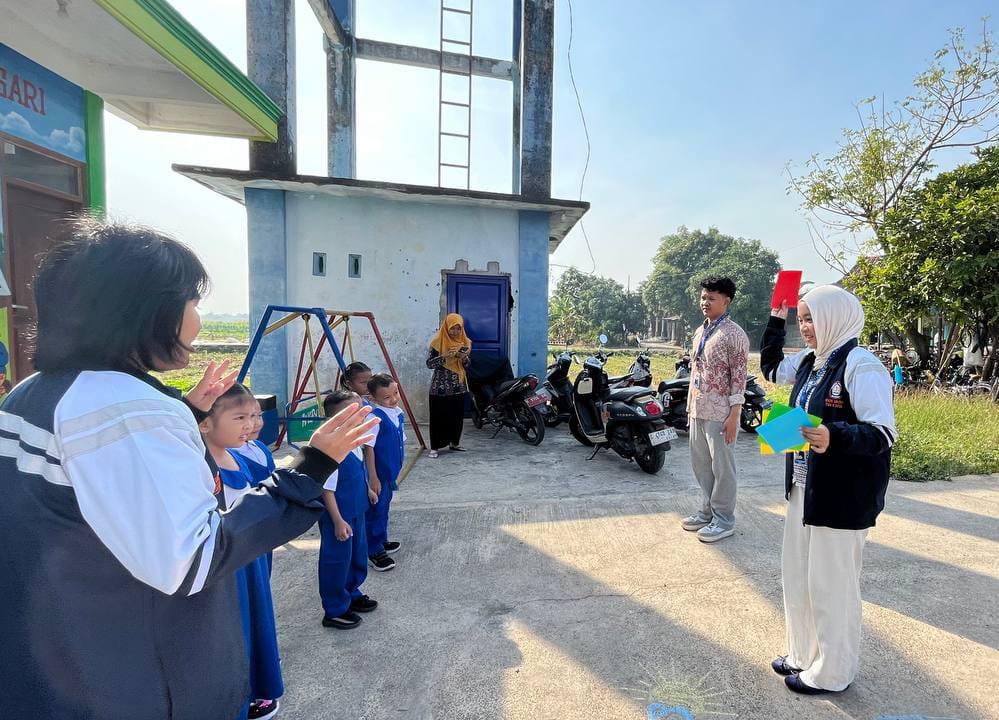
In its implementation, the children were introduced to color vocabulary in English, such as red, yellow, blue, and green. The material was delivered using colored paper as a medium to help children connect the vocabulary with the colors they saw. After the vocabulary introduction, the children took part in games with simple instructions, such as finding objects of a mentioned color, picking colored balls out of a box and naming their colors, and performing movements according to the given instructions.
The “Play, Move, Speak” program is expected to provide a positive early experience in getting to know English for kindergarten children. In addition to expanding their familiarity with English color vocabulary, this activity also encourages children’s confidence to pronounce vocabulary and respond to simple instructions in English. Through this interactive and enjoyable approach, learning English is hoped to become a more engaging and accessible experience, one that sparks children’s enthusiasm to keep learning English from an early age.
Writer: Zalfa Zahiyah Rasyanda