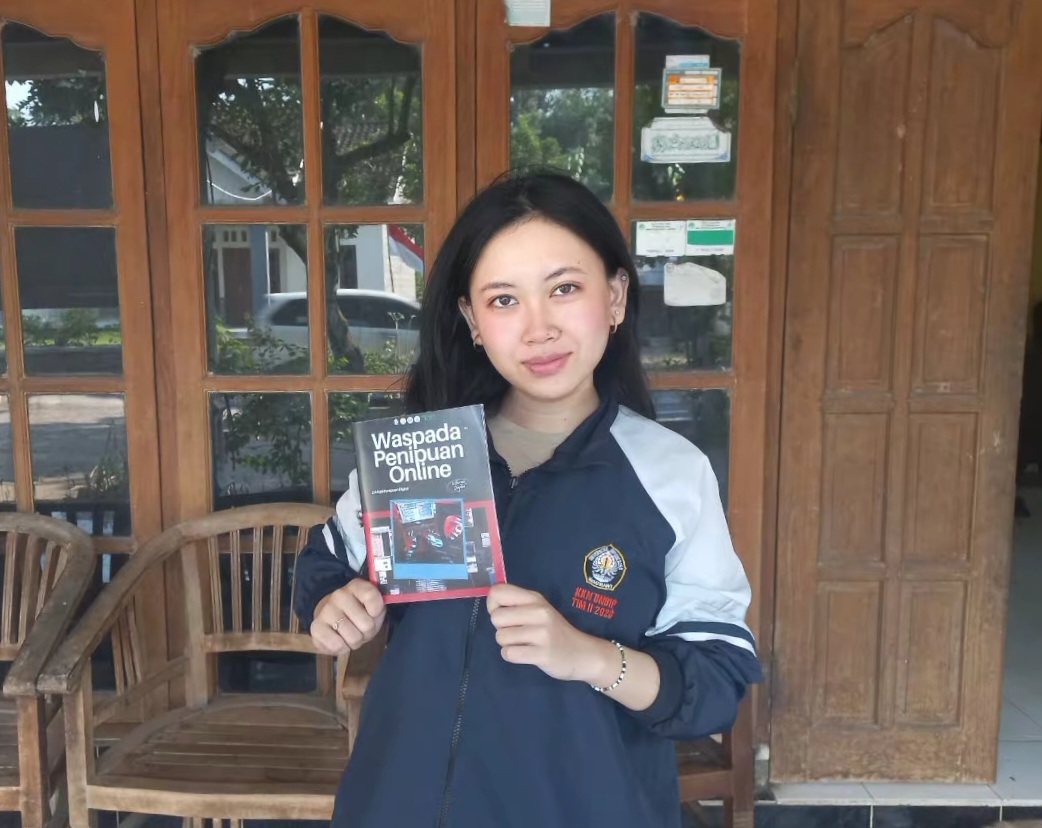
The increasing number of online scams in Indonesia has highlighted the growing importance of digital literacy within local communities. Fraudulent schemes involving fake WhatsApp messages, phone calls impersonating government institutions, phishing links, and malicious APK files continue to evolve, posing serious risks to personal data and financial security. In response to this growing concern, Elvina Dhea Saputri, a student participating in Universitas Diponegoro’s Thematic Community Service Program (KKN Tematik) IDBU 13 in Teras Village, developed a digital booklet entitled “Beware of Online Scams” as an educational initiative to strengthen public awareness of cybercrime.
The initiative was carried out during the July 2026 KKN Tematik program in Teras Village, Boyolali Regency, Central Java. The booklet was developed based on the community’s need for accessible information on online safety. Educational materials were compiled from credible sources and presented in clear, reader-friendly language, complemented by engaging visual illustrations to ensure they could be easily understood by people of different ages and educational backgrounds.
The digital booklet introduces readers to the definition of online scams, the most common fraud schemes, warning signs of digital fraud, preventive measures, and practical steps to take if they become victims of cybercrime. Through this initiative, community members are encouraged to become more cautious in protecting their personal information, recognizing suspicious online activities, and making informed decisions when using digital technology in their daily lives.
To maximize its outreach, the booklet was published through the community literacy Instagram account @bacaaditeras, distributed via residents’ WhatsApp groups, and made available on a website, allowing community members to access the educational material at any time. By utilizing multiple digital platforms, the initiative broadens public access to reliable information while encouraging residents to share the booklet with their families and neighbors.
The educational campaign received positive responses from the Teras Village community, particularly members of the local PKK women’s organization. Many residents appreciated the booklet for presenting practical information in a simple, engaging, and easy-to-understand format. They considered the educational material highly relevant to the growing number of online scams and expressed hope that similar initiatives would continue to enhance digital literacy within the community. These responses indicate that the booklet successfully addressed the community’s need for practical guidance on preventing online fraud.
Through this initiative, the student hopes to encourage the people of Teras Village to become more aware of the importance of protecting their personal data, thinking critically before responding to suspicious online messages, and recognizing the various forms of cyber fraud that continue to emerge. More importantly, the booklet is expected to serve as a sustainable educational resource that will continue to benefit the community beyond the completion of the KKN program.
This initiative reflects Universitas Diponegoro’s commitment to the Tri Dharma of Higher Education, particularly its mission of community service. By integrating digital innovation with public education, the program also contributes to several United Nations Sustainable Development Goals (SDGs), including Quality Education (SDG 4) by promoting digital literacy, Industry, Innovation and Infrastructure (SDG 9) through the use of digital media for public education, Sustainable Cities and Communities (SDG 11) by expanding access to reliable information, and Peace, Justice and Strong Institutions (SDG 16) by strengthening public awareness of cybercrime prevention.