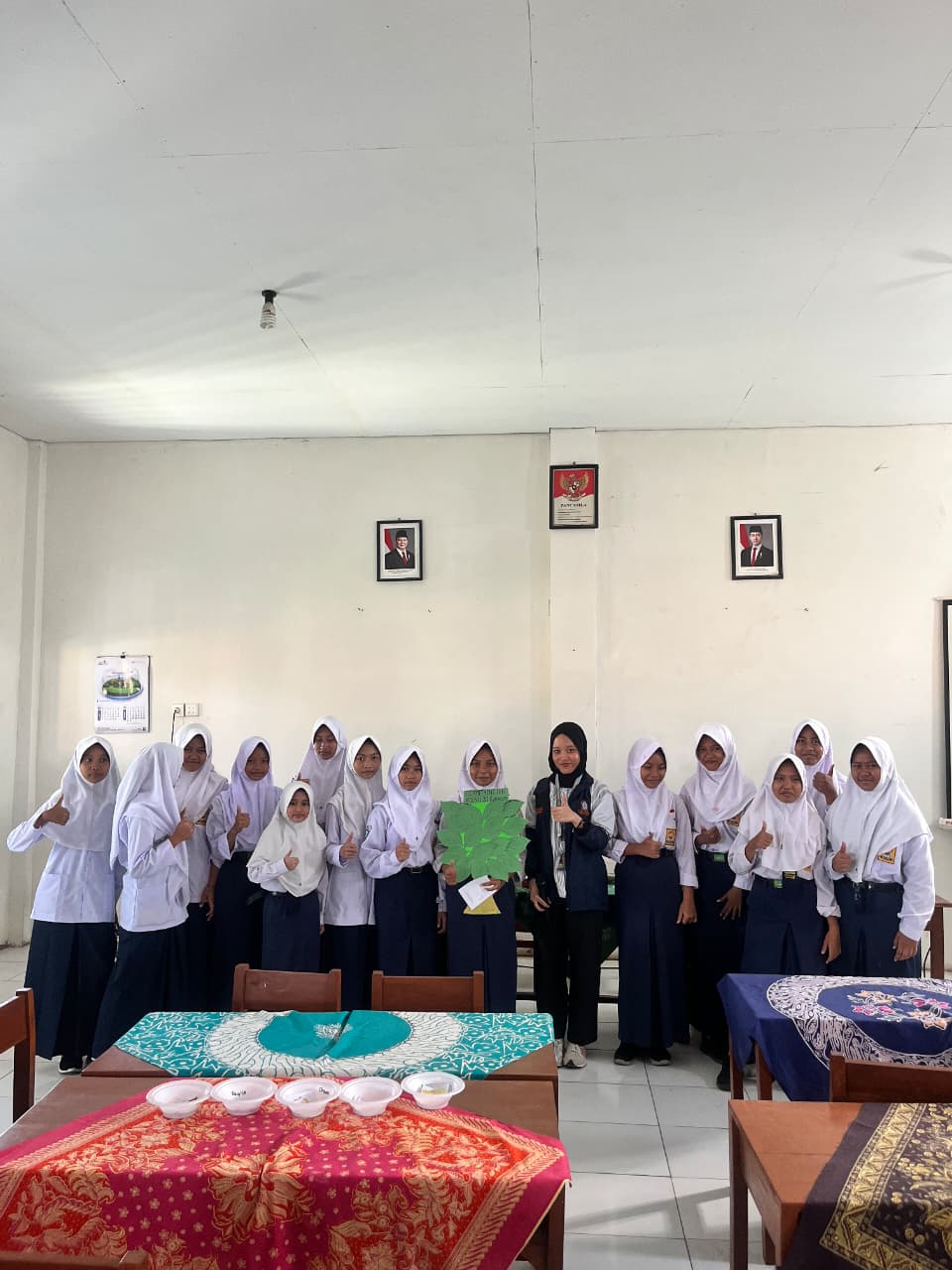
Waste management requires more than simply throwing waste into bins. It also involves understanding how to reduce waste and make use of items that can still be reused. Introducing these concepts at an early age is an important step toward building environmental awareness among students. According to this need, students from KKN Team II of Universitas Diponegoro conducted a bilingual waste management education program at MTs NU 20 Kangkung on Monday (July 27, 2026).

The activity involved students of MTs NU 20 Kangkung and used both Indonesian and English as the languages of instruction. Adillina Jasmine Jauhariy, an English Department student at Universitas Diponegoro, served as the facilitator throughout the learning session. The educational program adopted a “game-based learning” approach to make lessons on waste management more interactive and accessible to students.
The learning materials focused on the zero-waste concept and the principles of Reduce, Reuse, and Recycle (3R). Rather than relying only on explanations, the concepts were introduced through a bunch of interactive activities that encouraged students to participate directly. The use of English also provided students with an opportunity to learn vocabulary related to the environment and waste management.
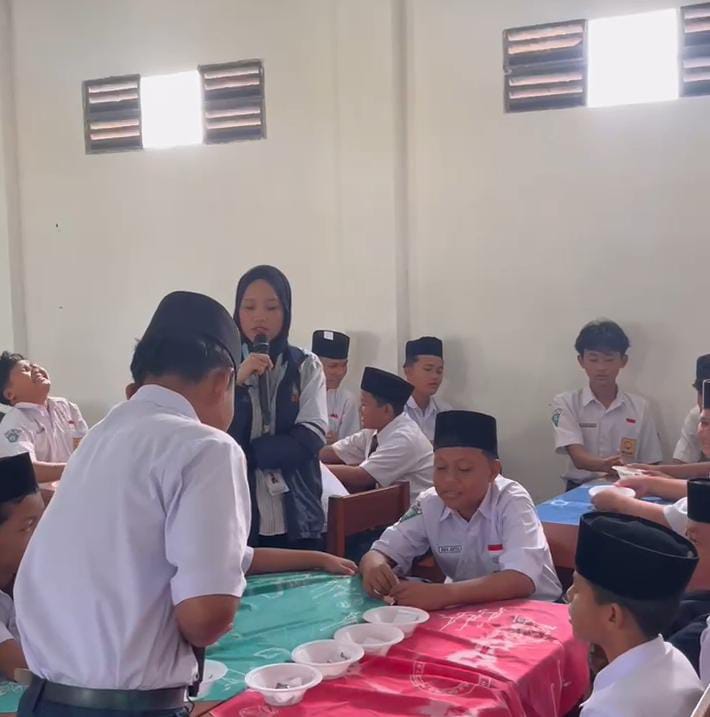
The session began with an introduction to waste management through the zero-waste approach. Students learned about ways to reduce the amount of waste they make, as well as how to reuse and recycle items that are still valuable. The material was then connected to the 3R principles, allowing students to identify examples of how these practices can be applied in their daily lives.
Following the presentation, the students took part in an Eco-Sorting Relay. In this game, they were asked to classify different types of waste into the appropriate categories, such as organic and inorganic waste, while also identifying how the principles of Reduce, Reuse, and Recycle could be applied. The game was conducted in groups, encouraging students not only to understand the material but also to work together and actively participate throughout the activity.
The next activity encouraged students to develop a simple personal commitment to adopting zero-waste habits in their daily lives. Each commitment was written down and placed on a Commitment Tree as a statement of the students’ willingness to begin practicing more environmentally friendly habits.
In the final session, students were introduced to the 7-Day Green Challenge. Through this challenge, they were encouraged to practice environmentally friendly habits for seven consecutive days. The activity was designed to ensure that the lessons did not end with the classroom session, but could instead be continued through simple actions in the students’ everyday lives.
Through this program, students of MTs NU 20 Kangkung were introduced to the zero-waste concept and the 3R principles in both English and Indonesian. In addition to improving their understanding of waste management, the activity created a more engaging learning environment, with students showing enthusiasm throughout the various game-based activities.
The program also contributed to Sustainable Development Goals (SDGs) 4, Quality Education, by promoting interactive and contextual learning. It also supported SDGs 12, Responsible Consumption and Production, through the introduction of the zero-waste concept and the principles of Reduce, Reuse, and Recycle. Through this initiative, KKN Team II UNDIP hopes that the knowledge gained by the students can be applied in their daily habits and contribute to engaging environmental awareness from an early age.
Writer: Adillina Jasmine Jauhariy